
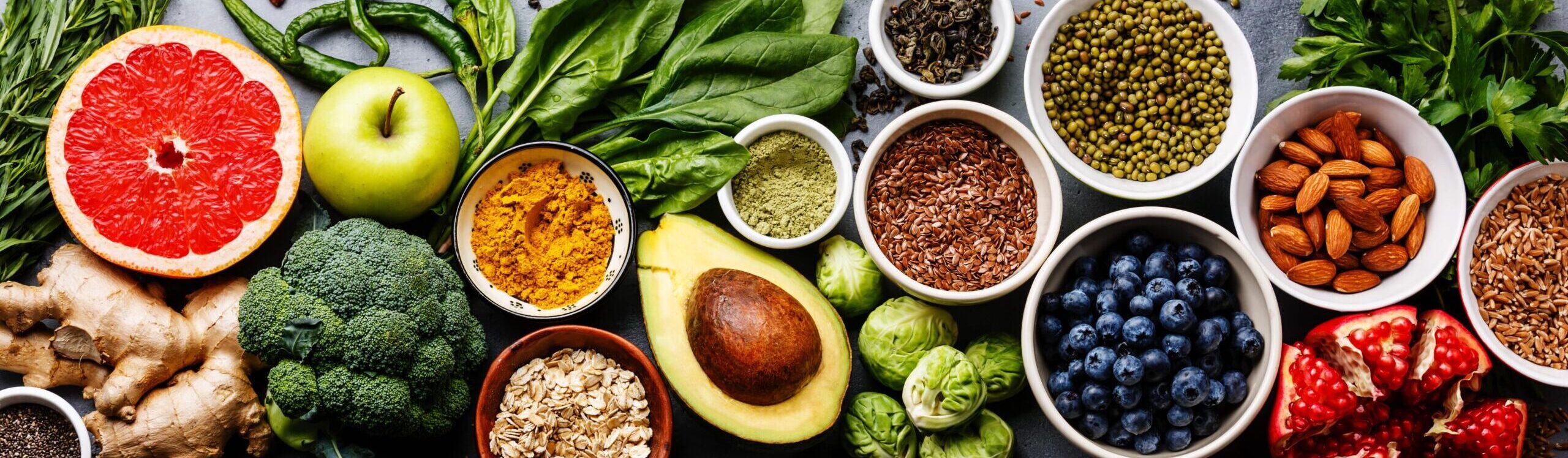
When diving into the realm of health and nutrition, you often come across a term frequently entwined with discussions on diet and fitness – kilojoules, or kJ. These energy units are integral to understanding how your food intake translates into energy consumption. But what does kJ really mean, and how does it interact with the thermodynamics of your body? Knowing these details is crucial, as energy units are the compass by which you navigate the vast sea of dietary choices, ensuring you maintain a balance that promotes health and wellness.
Whether you’re a fitness enthusiast, someone interested in weight management, or simply curious about the science behind what fuels you, grasping the concept of kJ is indispensable. Kilojoules are more than just numbers on the nutrition facts panel; they represent the potential to power your every action, from the most mundane tasks to the most strenuous workouts. Armed with the knowledge of energy units like kJ, you can make informed decisions that align with your nutrition and health objectives.
Key Takeaways
- Understanding kJ is essential to manage your diet and monitor your energy consumption effectively.
- Kilojoules are the metric units of energy used to quantify the energy provided by food.
- Knowing the role of kJ in thermodynamics helps you comprehend how your body processes food into fuel.
- Being aware of kJ in food can assist in maintaining a healthy weight and achieving your fitness goals.
- Proper kJ knowledge enables you to plan meals that fit your energy needs for a balanced diet.
- kJ plays a significant role in nutrition by revealing the energy content in what we consume daily.
What Is a Kilojoule (kJ)?
As you explore various aspects related to diet and health, you’ll frequently encounter a key metric of energy measurement: the kilojoule. Known as “kJ,” this SI unit is a cornerstone of scientific energy measurement and plays a crucial role in nutritional science and physical activity. But what precisely is a kilojoule, and why is it so important for you to understand it?
The Scientific Definition of kJ
A kilojoule, symbolized as kJ, is a unit of energy within the International System of Units (SI unit system). It’s defined as the amount of energy exerted when a force of one thousand newtons moves an object one meter. In simpler terms, think of it as a powerful way to quantify the energy you consume and expend every day. The scientific notation for a kilojoule is ML2T-2, where M represents mass, L for length, and T signifies time.
How kJ Measures Energy
Energy can often seem abstract, but at its heart, energy measurement is all about quantification and comparison. When health professionals and scientists talk about kJ, they’re discussing the energy input and output—essentially, the fuel for your body’s various functions and activities. Whether it’s the power behind your morning run or the energy derived from your breakfast, kJ provides a standardized way to measure and communicate this vital information. Recognizing the kJ values in the foods you eat and the activities you perform is integral to maintaining a balanced and healthy lifestyle.

In the grand scheme of energy, kilojoules are just one part, but understanding them can enhance your insight into how your body manages energy. So, whenever you see “kJ” on your snack bar or gym equipment, you’ll know it signifies much more than just a number—it represents the scientific measurement of energy that equips you with the knowledge to make better choices for your health.
Now that you have a foundational grasp of kJ and its significance, you’re better positioned to delve into the intricacies of energy consumption and weight management—a journey that starts with the food you eat and ends with the energy you expend.
Converting kJ to Other Energy Units
When managing your diet or tracking energy consumption for workouts, it’s useful to convert energy units. Knowing how to translate kilojoules to calories, or converting kJ to other energy units, is a practical skill. As the majority of nutritional information lists energy in calories, understanding the conversion process is essential for accurate dietary planning and maintaining health.

From kJ to Calories and Joules
You might be wondering why it’s necessary to convert between different energy units. After all, if energy values are already provided on food labels, why bother with converting kJ or calories? While kilojoules are the standard measure of energy in many parts of the world, the calorie is still predominantly used in the United States and for general nutrition discussions. A single calorie—the amount of energy needed to raise the temperature of one gram of water by one degree Celsius—is the equivalent of approximately 4.184 kilojoules. This knowledge plays a significant role, especially when converting kJ to calories.
Conversely, when diving into the realm of physics or scientific research, the joule is the more commonly referenced unit for measuring energy. You may find yourself converting kJ to joules to align with academic papers or to discuss energy consumption in scientific contexts. A joule is a smaller unit than kilojoule, with 1 kilojoule equaling 1000 joules. Whether adjusting recipes, comparing food labels, or calculating energy expenditure, understanding these conversions of kilojoules to calories is indispensable.
Utilizing Conversion Calculators
In the digital age, there’s no need to perform these conversions manually. Thanks to a plethora of online tools, utilizing conversion calculators simplifies the process of transforming kilojoules to calories or joules. If you’re a health professional, fitness enthusiast, or someone closely monitoring their intake for weight management, these tools are remarkably useful. By inputting the energy value in kJ, you can instantly obtain its calorie or joule equivalent, making it a breeze to convert kJ into the energy units more familiar to you.
| Energy Unit | Value in kJ | Value in Calories | Value in Joules |
|---|---|---|---|
| 1 Calorie | 4.184 kJ | 1 Cal | 4184 J |
| 1 Joule | 0.001 kJ | 0.000239 Cal | 1 J |
| 1 kJ | 1 kJ | 0.239 Cal | 1000 J |
As you can see, whether you are making a quick calculation to determine the energy content of a meal or you are interested in the physics of your workout routine, making sense of energy units like kilojoules, calories, and joules doesn’t have to be complex. With this knowledge and the right tools, you can make more informed choices about your nutrition and energy consumption.
kJ in Daily Life: Understanding Energy Consumption
Embarking on a path to better health starts with a critical component of our diet – the energy our food supplies. This energy is often measured in kilojoules (kJ), a term you’ve likely seen on food labels, emphasizing its role in our daily nutrition and diet. Understanding how to interpret these figures is more than academic; it’s a practical skill that guides you toward a healthier lifestyle. The impact of kJ on your energy consumption is significant, directly influencing your ability to manage weight and maintain an optimal metabolic rate.

The Role of kJ in Nutrition and Diet
Navigating the complexities of nutrition can seem daunting, especially with various metrics like calories and kilojoules vying for attention. However, your awareness of kilojoules in food serves as a key to unlocking better diet choices. Every food product holds an energy signature, quantified in kJ, that directly correlates to energy consumption. It’s this energy that your body utilizes for everything from thinking to exercising, making those kJ readings on packaging more than just numbers—they’re a direct insight into the fuel you’re providing your body.
Being calorie-aware means recognizing that each snack, meal, and drink is a unit of energy that must be balanced against your daily activities and bodily needs. By understanding the food energy in kJ, you can make informed decisions, tailoring your intake to match both the demands of your physical activities and your lifestyle goals. Whether aiming to lose, maintain, or gain weight, the kJ content in what you consume should harmonize with your overall diet plan.
- Manage daily energy levels by choosing foods with appropriate kJ values.
- Balance your physical activity with energy intake for weight control.
- Plan meals and snacks according to kJ content for sustained energy.
Your journey towards understanding the role of kJ in your diet doesn’t end here. It continues each time you reach for a food item, as you align your choices with your energy needs, fostering a healthier and more balanced you. By paying attention to kilojoules, you’re taking charge of your nutrition, ensuring that each bite is a step toward a better understanding of your body’s energy consumption and needs.
Calculating Your Energy Requirements
When it comes to maintaining a balanced diet and managing your weight effectively, understanding your specific energy requirements is important. These requirements are not just static numbers but depend significantly on a range of personal factors including your metabolic rate, age, weight, height, and notably, your activity levels. Knowing the amount of energy, measured in kilojoules (kJ), that your body needs on a daily basis helps you create a diet that sustains your lifestyle while keeping you healthy.

Determining Daily kJ Needs Based on Activity Levels
Your daily kJ intake should align with the energy you expend through your activities throughout the day. For an average man, the benchmark hovers around 11,500 kJ, which equates to roughly 2,600 kcal per day, while an average woman may require closer to 8,700 kJ or 2,050 kcal per day. However, these figures can vary quite a bit depending on your individual circumstances.
Those with higher activity levels, for example, will have increased daily energy needs; they burn more energy and thus should consume more to compensate. Conversely, a more sedentary lifestyle necessitates fewer kJ for balance.
Let’s break this down further:
- **Low Active**: Sedentary jobs and little to no exercise.
- **Moderately Active**: Some physical activity during the day or regular exercise sessions.
- **Highly Active**: Engaging in vigorous physical exercises most days or having a physically demanding job.
Adjusting your kJ intake according to these categories can optimize your metabolic rate and support better weight management. Only by balancing the energy you consume with the energy you use can you maintain, lose, or gain weight as you desire.
Here’s an illustrative table that simplifies how you might adjust your consumption:
| Activity Level | Average Daily kJ Needs for Men | Average Daily kJ Needs for Women |
|---|---|---|
| Low Active | 8,400 kJ | 6,300 kJ |
| Moderately Active | 11,500 kJ | 8,700 kJ |
| Highly Active | 12,600 kJ or more | 10,500 kJ or more |
Remember, these are general guidelines and should be adjusted to fit your personal characteristics and daily energy needs. Consult with a healthcare professional to determine the most accurate energy needs for your lifestyle. As you map out your nutritional strategy, don’t underestimate the power of kJ. It’s not just about cutting back or indulging—it’s about fueling your body efficiently for the life you lead.
How kJ Affects Weight Management
Understanding the kj effect on weight management goes beyond mere numbers. It’s about grasping how the energy we consume and expend impacts our body’s natural balance. Through the lens of diet health, we see that kilojoules—units of food energy—can be powerful determinants in achieving our weight goals.

When considering an energy balance, it’s essential to know that not all kilojoules are created equal. The balance between energy intake (in the form of kJ from food) and energy output (through daily activities and natural metabolic functions) plays a critical role in either maintaining, gaining, or losing weight.
Balancing kJ Intake with Metabolic Rate
Your body’s metabolic rate is the baseline at which it uses energy, and this rate can differ from one person to another. It’s influenced by various factors, including age, genetics, and activity levels. To maintain weight, the aim is to consume a similar amount of energy that your body burns daily. Understanding how to measure this with kilojoules provides a roadmap for managing dietary energy efficiently.
If the kJ you consume exceeds what your metabolic rate and physical activities burn, excess energy gets stored as fat. This process can lead to weight gain over time if not corrected. Conversely, consuming fewer kJ than what your body uses generally leads to weight loss because your body will turn to stored fat for the additional energy it requires.
Striking a perfect balance between kJ intake and expenditure is the cornerstone of effective weight management. Here’s a simplified strategy to help you align your energy consumption with your metabolic needs:
- Mind your portions to manage kJ intake.
- Stay active to influence your metabolic rate positively.
- Choose foods that contribute to satiety but are low in kJ.
Adjusting your lifestyle habits to foster a healthy energy balance is not only about cutting out certain foods or engaging in strenuous workouts. It’s about making sustainable choices that sync with your body’s energy demands and complying with the principles of diet health. Through awareness and intentional actions, you can use the knowledge of kilojoules to positively influence your weight and overall well-being.
Food and Nutrition: The kJ Content of Common Foods
Stepping into the world of food nutrition, you’ll quickly encounter the concept of kJ content in relation to common foods. Understanding the kilojoule values of what you eat forms the foundation for crafting a diet aligned with your health and energy goals. Whether you’re fueling an active lifestyle or managing weight, the kJ figures can guide your dietary choices.
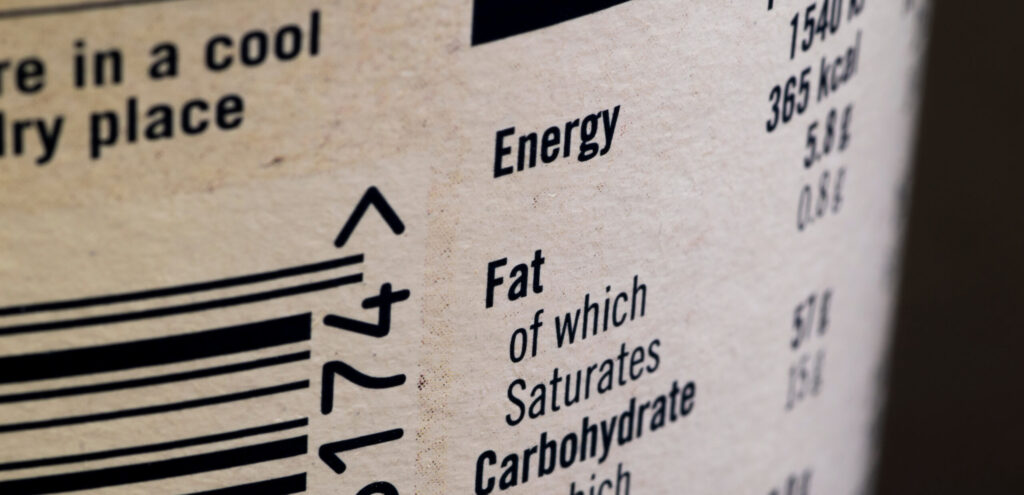
Interpreting Food Labels for kJ Information
Nutrition labels are your resource for making informed decisions at the grocery store. Amidst a variety of figures and percentages, the “energy” section of these labels is critical—it’s where you’ll find the kj content of the food item. This numerical indication tells you how much energy—measured in kilojoules—your body will receive from consuming it.
To put it simply, interpreting food labels is like being a detective. You examine each product, looking for clues that will help maintain a balanced nutrition plan. Here’s where your understanding of kJ values comes into play. As you scan the shelves, ask yourself: “Which items fit into my daily kJ budget?”
Let’s dive into a comparison of the kj content in some everyday food items to illustrate how they can fit into various dietary needs:
| Food Item | Portion Size | kj Content | Recommended for… |
|---|---|---|---|
| Almonds (raw) | 1 oz (28g) | 677 kJ | Energy-dense snacking |
| Apple (medium) | 1 fruit (182g) | 218 kJ | Low-kJ munching |
| Chicken breast (cooked) | 3.5 oz (100g) | 690 kJ | High-protein diets |
| Spinach (raw) | 1 cup (30g) | 29,1 kJ | Low-kJ nutrient boost |
| Whole wheat bread | 1 slice (28g) | 291 kJ | Everyday balanced diets |
With this information in mind, you can interpret food labels and choose products that best suit your lifestyle. If you’re an athlete or very active, you might lean towards foods with higher kJ values to keep up with your energy expenditure. Conversely, if weight loss is your goal, identifying foods with lower kJ content can be incredibly beneficial.
Always remember, understanding kJ content is not just about calorie counting; it’s about making smarter dietary choices for a healthier you.
The Importance of kJ in Health and Diet
As you navigate the complexities of maintaining health and managing your weight, understanding the importance of kilojoules (kJ) becomes essential. Not merely a number, kJ signifies the energy content of your meals and thus holds great influence over your overall wellness. Your commitment to a balanced energy intake hinges on your ability to evaluate and understand this energy unit in the context of your daily diet.
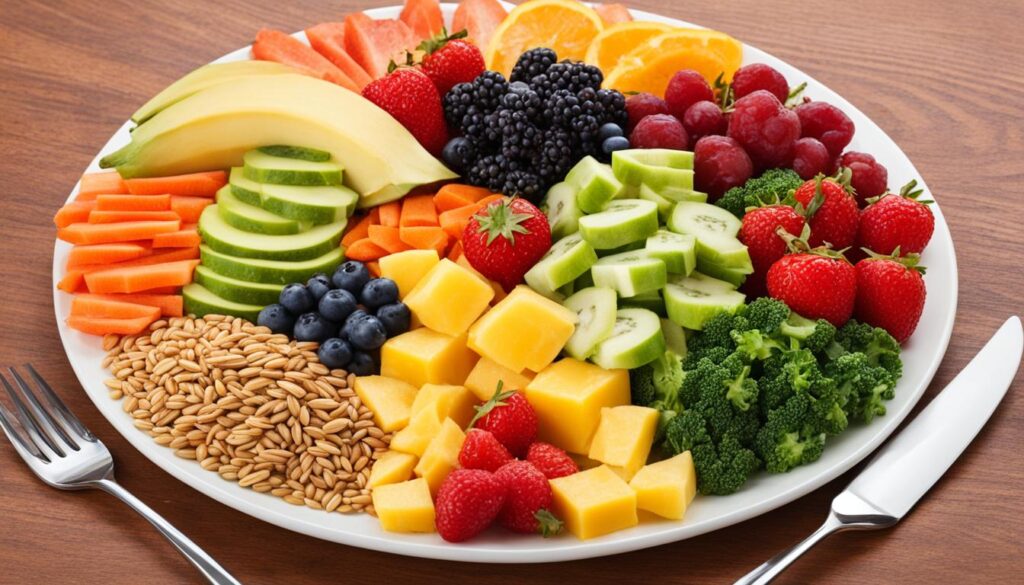
Energy evaluation goes beyond mere calorie counting; it’s about ensuring an adequate supply of energy that aligns with your individual lifestyle, health goals, and dietary needs. The use of kJ as a guide allows you to monitor your daily energy consumption to ensure that what you consume meets, but does not exceed, your body’s requirements.
Evaluating the Energy in Your Diet
When planning your meals, it’s vital to incorporate a mix of nutrient-dense foods like fruit and vegetables, starchy foods, valuable proteins, and unsaturated fats. These provide not just vital nutrients but also a well-rounded energy profile for your diet. By keeping tabs on the kJ content of these foods, you lay the foundation for a health-conscious eating plan that supports your well-being and weight management efforts.
- Choose whole foods, which are often lower in kJ but richer in nutrients.
- Understand the kJ content to maintain a balanced diet that fuels your body efficiently.
- Plan your meals to manage and monitor your kJ intake for a sustained energy supply throughout the day.
Whether you’re aiming to lose, gain, or maintain weight, the key to success is the delicate equilibrium between the kJ you ingest and the energy you expend. An intimate knowledge of kJ importance in diet and health empowers you to make informed choices, leading towards a more robust and dynamic lifestyle.
An Overview of kJ in Physical Exercise
When engaging in physical exercise, an understanding of the energy we expend is critical. This energy, often measured in kilojoules (kJ), reflects the intensity and efficiency of your workouts. Whether you’re a seasoned athlete or a fitness novice, grasping the concept of kJ in relation to energy expenditure can immensely benefit your training and weight management plans. As you embark on different forms of physical activity, it’s advantageous to know how these activities burn energy, allowing you to tailor your nutritional intake and maximize the effectiveness of your exercise routine.
Estimating Energy Expenditure During Workouts
During your workouts, the number of kilojoules you burn can vary significantly depending on the activity’s intensity and duration. High-intensity exercises, such as sprinting or cycling, can lead to a substantial activity energy burn, consuming more kJ in a shorter time frame. Understanding this energy expenditure is pivotal in aligning your kJ intake with your physical exercise goals. By estimating the energy you expend, you can adjust your diet to either compensate for a high-energy burn or to ensure a caloric deficit for weight loss.
While it’s clear that engaging in regular physical exercise is beneficial, it’s the balance of energy expenditure that can make a difference in your health. Not only does this balance affect your weight, but it also influences your overall metabolic rate—a key driver in how many kJ your body demands and utilizes. Thus, a nuanced comprehension of how kJ works in tandem with physical activity allows you to fine-tune your fitness approach, ensuring your body is fueled appropriately for both its immediate needs and long-term health.